🎉 Up to 70% Off Selected ItemsShop Sale
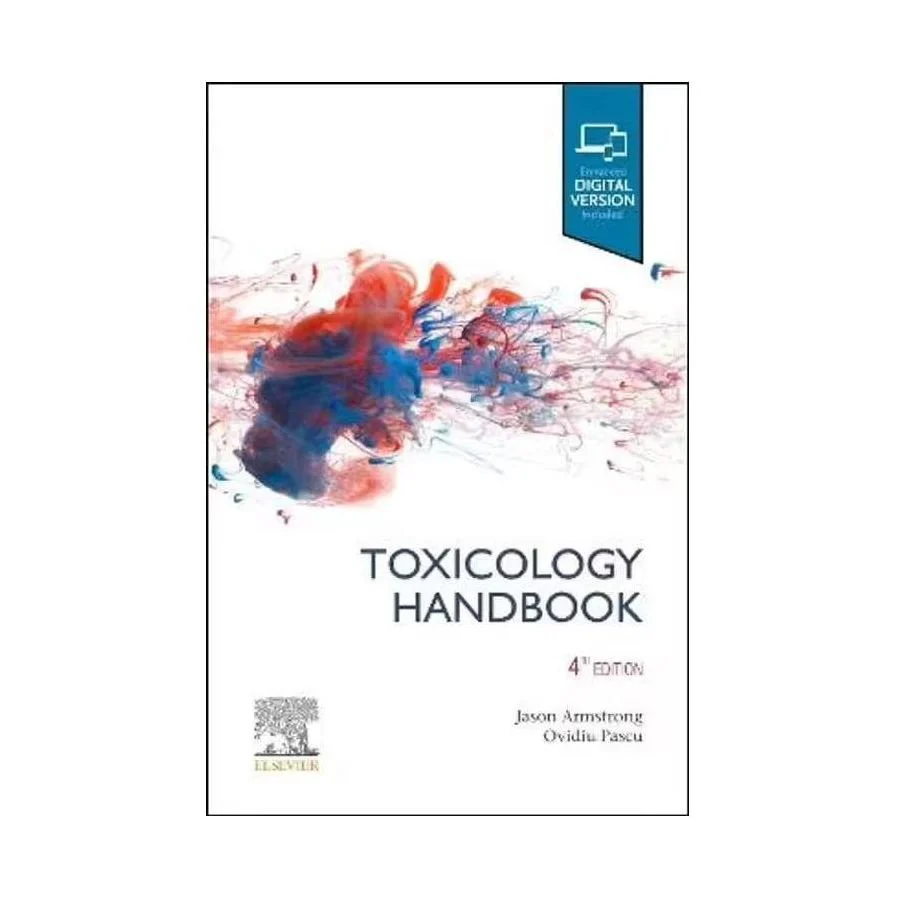
Toxicology Handbook - 4th Edition
Now in its fourth edition, the Toxicology Handbook is Australia's leading reference guide for quick and evidence-informed decision making on treatment of the acutely poisoned patient.
The book has been streamlined and fully updated to provide a comprehensive yet concise guide for all medical practitioners and health-care professionals who deal with poisonings. It contains quickly accessible information on poisons, toxins, antidotes, envenomings and antivenoms, and uses a structured and rigorous risk assessment-based approach to guide appropriate treatment decisions.
Written by leading Australian specialists in toxicology and informed by the latest clinical research, this is a must-have addition to all emergency departments and poison information centres.
Key Features
By Jason Armstrong, MD FACEM and Ovidiu Pascu, MD FACEM, Consultant Emergency Physician and Clinical Toxicologist, Sir Charles Gairdner Hospital, Perth, WA Poisons Information Centre; Clinical Senior Lecturer in Emergency Medicine, University of Western Australia, WA, Australia
The book has been streamlined and fully updated to provide a comprehensive yet concise guide for all medical practitioners and health-care professionals who deal with poisonings. It contains quickly accessible information on poisons, toxins, antidotes, envenomings and antivenoms, and uses a structured and rigorous risk assessment-based approach to guide appropriate treatment decisions.
Written by leading Australian specialists in toxicology and informed by the latest clinical research, this is a must-have addition to all emergency departments and poison information centres.
Key Features
- Concisely written - helps the student, trainee, and clinician to find information quickly and easily
- A simple, easily remembered and elegant framework (R RSI DEAD) forming the basis of care for all toxicology patients
- Fully revised content, streamlined to be more user-friendly
- Evidence based and up to date - supports appropriate decision making
- Helps resolve common treatment dilemmas, including for digoxin and lithium poisoning, corrosive ingestions and management of envenomings
- Written and edited by experts in the field of toxicology
- An eBook included in all print purchases
- Expanded information on agents that are seen with increasing frequency in poisoned patients, including lamotrigine and pregabalin
- Updated detail on the management of agents including direct oral anticoagulants, digoxin, desvenlafaxine and corrosives
- Updated and standardised treatment recommendations for dysrhythmias, particularly resulting from drug-induced conduction abnormalities (QRS and QT prolongation)
- Simplified and standardised approaches to management (particularly cardiovascular toxicity from a variety of agents)
By Jason Armstrong, MD FACEM and Ovidiu Pascu, MD FACEM, Consultant Emergency Physician and Clinical Toxicologist, Sir Charles Gairdner Hospital, Perth, WA Poisons Information Centre; Clinical Senior Lecturer in Emergency Medicine, University of Western Australia, WA, Australia
$11.38
Original: $37.92
-70%Toxicology Handbook - 4th Edition—
$37.92
$11.38Product Information
Product Information
Shipping & Returns
Shipping & Returns
Description
Now in its fourth edition, the Toxicology Handbook is Australia's leading reference guide for quick and evidence-informed decision making on treatment of the acutely poisoned patient.
The book has been streamlined and fully updated to provide a comprehensive yet concise guide for all medical practitioners and health-care professionals who deal with poisonings. It contains quickly accessible information on poisons, toxins, antidotes, envenomings and antivenoms, and uses a structured and rigorous risk assessment-based approach to guide appropriate treatment decisions.
Written by leading Australian specialists in toxicology and informed by the latest clinical research, this is a must-have addition to all emergency departments and poison information centres.
Key Features
By Jason Armstrong, MD FACEM and Ovidiu Pascu, MD FACEM, Consultant Emergency Physician and Clinical Toxicologist, Sir Charles Gairdner Hospital, Perth, WA Poisons Information Centre; Clinical Senior Lecturer in Emergency Medicine, University of Western Australia, WA, Australia
The book has been streamlined and fully updated to provide a comprehensive yet concise guide for all medical practitioners and health-care professionals who deal with poisonings. It contains quickly accessible information on poisons, toxins, antidotes, envenomings and antivenoms, and uses a structured and rigorous risk assessment-based approach to guide appropriate treatment decisions.
Written by leading Australian specialists in toxicology and informed by the latest clinical research, this is a must-have addition to all emergency departments and poison information centres.
Key Features
- Concisely written - helps the student, trainee, and clinician to find information quickly and easily
- A simple, easily remembered and elegant framework (R RSI DEAD) forming the basis of care for all toxicology patients
- Fully revised content, streamlined to be more user-friendly
- Evidence based and up to date - supports appropriate decision making
- Helps resolve common treatment dilemmas, including for digoxin and lithium poisoning, corrosive ingestions and management of envenomings
- Written and edited by experts in the field of toxicology
- An eBook included in all print purchases
- Expanded information on agents that are seen with increasing frequency in poisoned patients, including lamotrigine and pregabalin
- Updated detail on the management of agents including direct oral anticoagulants, digoxin, desvenlafaxine and corrosives
- Updated and standardised treatment recommendations for dysrhythmias, particularly resulting from drug-induced conduction abnormalities (QRS and QT prolongation)
- Simplified and standardised approaches to management (particularly cardiovascular toxicity from a variety of agents)
By Jason Armstrong, MD FACEM and Ovidiu Pascu, MD FACEM, Consultant Emergency Physician and Clinical Toxicologist, Sir Charles Gairdner Hospital, Perth, WA Poisons Information Centre; Clinical Senior Lecturer in Emergency Medicine, University of Western Australia, WA, Australia